Ask anyone who grew up around Yorkshire in the 2000s about bassline and there's a good chance they'll know exactly what you're talking about.
The warped bass, the pitched-up vocals, the unmistakable organ sounds. Tunes blasting out of car stereos, mix CDs getting passed around and tracks that somehow sounded even better when the bass was distorting through a cheap set of speakers.
For a generation growing up in places like Sheffield, Bradford and Leeds, bassline wasn't some obscure subgenre of dance music. It was part of the soundtrack to everyday life.
And while the rest of the country eventually caught on, the North had already been doing its own thing for years.
Before Bassline, There Was Niche
To understand where bassline came from, you've got to go back to Sheffield in the 1990s.
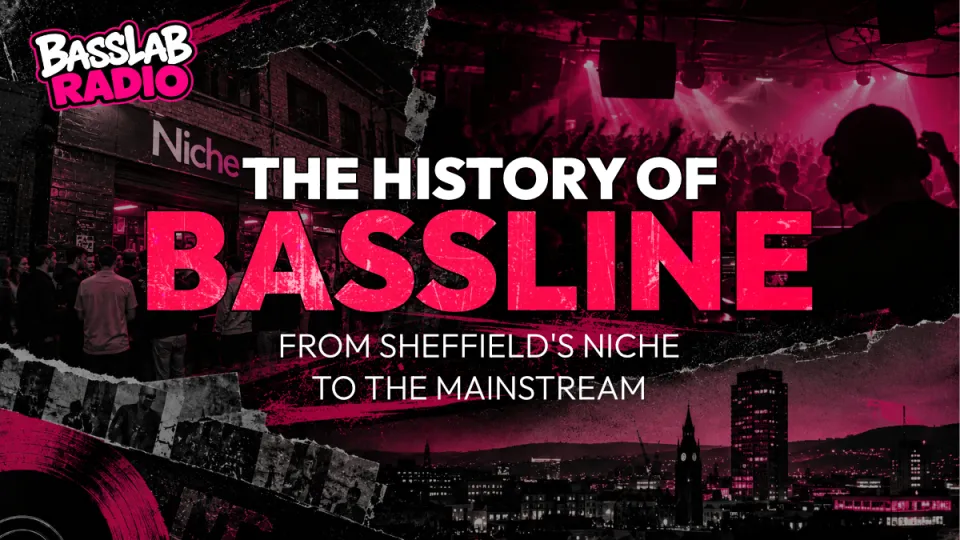
Niche nightclub, situated on Sidney Street, became one of the most important venues in the history of northern dance music. Opening in the early 1990s, it developed a reputation for its after-hours sessions, dedicated crowd and a sound that was getting increasingly difficult to find anywhere else.
At first, the music was heavily influenced by house and garage. But as the decade progressed, DJs began experimenting with heavier basslines, speed garage rhythms, organ sounds and familiar R&B vocals.
Tracks were being remixed specifically for the dancefloor. DJs wanted exclusives, and producers were making records that worked for the people in front of them rather than worrying about what might sell nationally.
Among the DJs associated with Niche were Shaun 'Banger' Scott, Jamie Duggan, Nev Wright, Andy Spoof and Chris Bailey.
The sound gradually developed its own identity. People started calling it Niche music, after the club itself.
Eventually, bassline became the name that stuck.
It's worth remembering that this didn't happen overnight. There wasn't one producer sitting in a studio who suddenly invented bassline. It was a gradual process involving DJs, producers, clubs and the people who kept turning up every weekend.
From Speed Garage to Bassline House
Bassline's roots are closely connected to UK garage, particularly the heavier speed garage records that became popular during the late 1990s.
Speed garage brought rolling basslines, shuffling percussion and a tougher edge to house music. Northern DJs took those ingredients and started developing something of their own.
The bass became more prominent. The organ sounds got heavier. Familiar vocals were reworked into tracks that could sound sweet one minute and absolutely filthy the next.
Early bassline house often leaned heavily into soulful vocals, piano riffs and big organ basslines. As the sound developed, producers experimented with more aggressive, warped bass sounds and influences from grime and 4/4 garage.
That's one reason old-school bassline can sound quite different from the music being released under the same name today.
And it's also why arguing about the exact difference between Niche, bassline, organ house and speed garage can turn into a surprisingly long conversation.
Preferably somewhere with a decent sound system.
Sheffield Started It. Yorkshire Made It Its Own.
Across Yorkshire, other clubs and DJs were developing their own relationship with the sound.
Bradford's Boilerhouse became an important destination for bassline house during the late 1990s, while Leeds had its own scene around venues such as Casa Loco.
As the music spread, it picked up different influences and developed regional variations.
Mix tapes and CDs were a huge part of that growth. Before streaming services made practically every track available in seconds, getting hold of the right DJ mix could be a mission in itself.
There were exclusive remixes, white labels and tracks that might have been massive in one town while barely being known twenty miles away.
Record shops played their part too, stocking the music and connecting producers with the DJs who could get their tunes heard.
For people growing up around Bradford and West Yorkshire in the early 2000s, the music wasn't necessarily something you had to go looking for. You could hear it around you.
That's part of the connection Bigby, founder of BassLab Radio, has with the sound. Growing up in Bradford, he remembers hearing the older bassline records throughout those years, including the kind of anthems that would later become synonymous with the genre's mainstream breakthrough.
It was a sound that belonged to the area, long before everyone else started paying attention.
The Tunes That Took Bassline National
By the mid-2000s, bassline had built a substantial following across Yorkshire and the Midlands.
Artists including Big Ang, DJ Q, T2 and TS7 were helping develop the music, while DJs continued pushing new productions through clubs, mixes and radio.
Then came 2007.
T2, a young producer from Leeds, released 'Heartbroken' featuring Jodie Aysha. With its instantly recognisable vocal and rolling bassline, the track became one of the defining records of the era.
It reached number two in the UK Singles Chart.
For a sound that had developed largely outside the attention of the mainstream music industry, that was a massive moment.
And it wasn't the only one.
In 2008, H "Two" O featuring Platnum released 'What's It Gonna Be', another bassline anthem that reached number two in the UK charts.
These were the records that introduced the genre to listeners who'd never stepped foot inside Niche, Boilerhouse or any of the other clubs associated with the scene.
Suddenly, bassline wasn't just something you heard on local mixes or at northern raves. It was appearing on national radio and commercial dance compilations.
Of course, plenty of people had been listening to it for years.
The charts had simply caught up.
The Difficult Years
Bassline's history isn't all packed dancefloors and chart success.
In 2005, the original Niche nightclub closed following a major police operation. The venue had faced years of scrutiny, and its closure became one of the most controversial moments in the scene's history.
There were concerns raised by authorities about crime and disorder associated with parts of the nightlife surrounding bassline events.
But DJs, promoters and supporters of the music also argued that the scene was being unfairly targeted, with racial prejudice and negative stereotypes influencing how it was treated.
The consequences went well beyond one nightclub.
Promoters faced difficulties organising events, and some DJs struggled to find venues willing to host bassline nights.
For a genre built around clubs and local communities, losing those spaces was a serious blow.
But shutting a venue doesn't mean you can shut down a sound.
Bassline continued through smaller events, independent producers, radio shows and the people who refused to let it disappear.
The New Generation
Bassline didn't stand still after its original commercial breakthrough.
Over the following years, its influence could be heard across UK garage, house and other bass-heavy styles.
A newer generation of artists began bringing the sound to different audiences, with producers and collectives such as CruCast helping introduce bassline-influenced music to younger ravers.
The production changed. Some of the basslines became more aggressive, the drops got bigger and the music increasingly crossed over with other UK dance genres.
Not everyone who loves the original Niche sound is going to love every modern bassline track. That's fair enough.
But genres have always changed as new producers put their own stamp on them.
The interesting part is how much of the original DNA remains.
Those rolling grooves, recognisable vocal hooks and basslines that seem determined to shake every loose fitting in the room haven't gone anywhere.
And in 2025, bassline's history received another moment of recognition through Bradford's City of Culture celebrations, including the Bassline Symphony project.
For music that once struggled to find acceptance outside its own community, that recognition meant something.
Is Bassline Going Mainstream Again?
There's a strong argument that bassline is moving into another mainstream chapter.
The sound has found new audiences, and younger producers are mixing its familiar ingredients with modern UK garage, house and bass music.
But there's a difference between bassline becoming popular and bassline losing what made it special.
The original scene wasn't built around streaming numbers, algorithms or carefully planned marketing campaigns.
It grew because DJs played records people loved, producers made music they wanted to hear and crowds kept coming back.
That's the part worth protecting.
From BassLab's point of view, bassline's growing popularity is something to welcome. The feeling is that the music is moving further into the mainstream, and this time it's here to stay.
That doesn't mean every new release needs to sound like something from a Niche mix CD in 2003.
There's room for the old-school sound and the new wave.
What matters is remembering where it came from, giving the people who helped build it their credit and making sure the next generation has somewhere to be heard.
Because Sheffield might have helped create bassline, but the people who carried it through Yorkshire and beyond are the reason we're still talking about it.
And judging by the way the sound keeps finding new audiences, that conversation isn't ending any time soon.